

Project Details Duration : 03 months Client Website : https://avarynthgroup.com/ Need any service Business Consulting? Feel free
- Duration : 03 months
- Client Website : https://avarynthgroup.com/
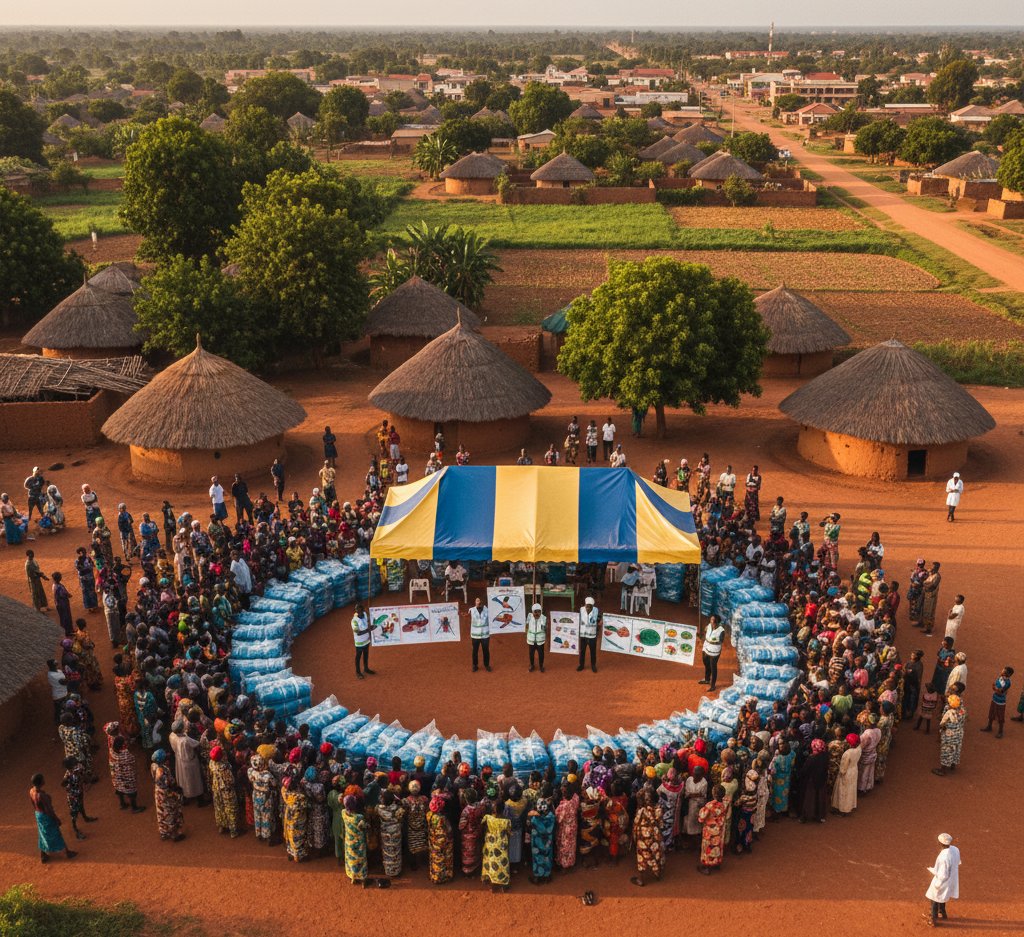
Project Overview Malaria remains endemic in Nigeria and continues to be the country’s foremost public health challenge, disproportionately affecting children under five years of age and pregnant women. Nigeria accounts for approximately 29% of the global malaria burden and, together with the Democratic Republic of Congo, contributes nearly 40% of malaria cases worldwide. Nationally, malaria is responsible for about 60% of outpatient visits, 30% of hospital admissions, and contributes significantly to maternal, infant, and under-five mortality. The dominant malaria vectors in Nigeria are Anopheles gambiae and Anopheles funestus, with Plasmodium falciparum accounting for over 95% of malaria infections and causing the most severe disease outcomes. In Jigawa State specifically, P. falciparum accounts for approximately 96.6% of infections. Malaria’s burden extends beyond health outcomes, exerting profound socio-economic consequences by reducing productivity, increasing household out-of-pocket expenditures, and slowing national economic growth.
This project provided a comprehensive background analysis to support malaria elimination planning in Jigawa State, aligned with Nigeria’s National Malaria Strategic Plan (NMSP) 2014–2020. It reviewed epidemiological trends, vector and parasite profiles, national and state malaria policy frameworks, and the evolving health system structure guiding malaria prevention, diagnosis, treatment, and surveillance.
The analysis confirmed malaria as a major driver of morbidity, mortality, and economic loss in Jigawa State, with high prevalence among children aged 6–59 months and persistent transmission driven by ecological and socio-demographic factors. The findings reinforced the urgency of scaling up core malaria interventions—prevention, diagnosis, treatment, advocacy and social mobilization, supply chain management, monitoring and evaluation, and program management—as articulated in the Jigawa State Annual Operational Plan. Jigawa State’s predominantly rural population, high poverty levels, and climatic conditions within the Sahel savannah zone contribute to sustained malaria transmission. Despite relatively high household ownership of insecticide-treated nets, malaria prevalence remains elevated, underscoring gaps in utilization, service delivery, and health-seeking behavior. The review further highlighted Jigawa State’s evolving health system architecture. Between 2008 and early 2016, the state operated an integrated and decentralized Gunduma Health System, which unified primary and secondary healthcare delivery under a single governance structure. Subsequent reforms aligned the state with the national health system model, resulting in the establishment of the State Primary Health Care Development Agency (SPHCDA) and 27 LGA PHC Offices, while the State Ministry of Health retained oversight of policy, regulation, and secondary and tertiary care. At the time of assessment, Jigawa State had 705 health facilities spanning primary, secondary, tertiary, and specialized care. While health sector budgetary allocations had increased over time, funding for malaria-specific interventions remained limited relative to disease burden. Decentralized drug procurement through the Jigawa Medicare Supply Organisation (JIMSO) represented a key system strength, though persistent challenges included workforce capacity, rural service coverage, and sustainable financing. Overall, the work delivered a clear, evidence-based understanding of malaria epidemiology and health system capacity in Jigawa State. It positioned policymakers and partners to implement a coordinated, well-targeted malaria elimination strategy grounded in national policy alignment, system strengthening, and context-specific interventions aimed at reducing malaria-related morbidity and mortality toward near-zero levels.