

Completely restore extensive materials interactive solutions. Progressively myocardinate viral
- Client Website : https://avarynthgroup.com/
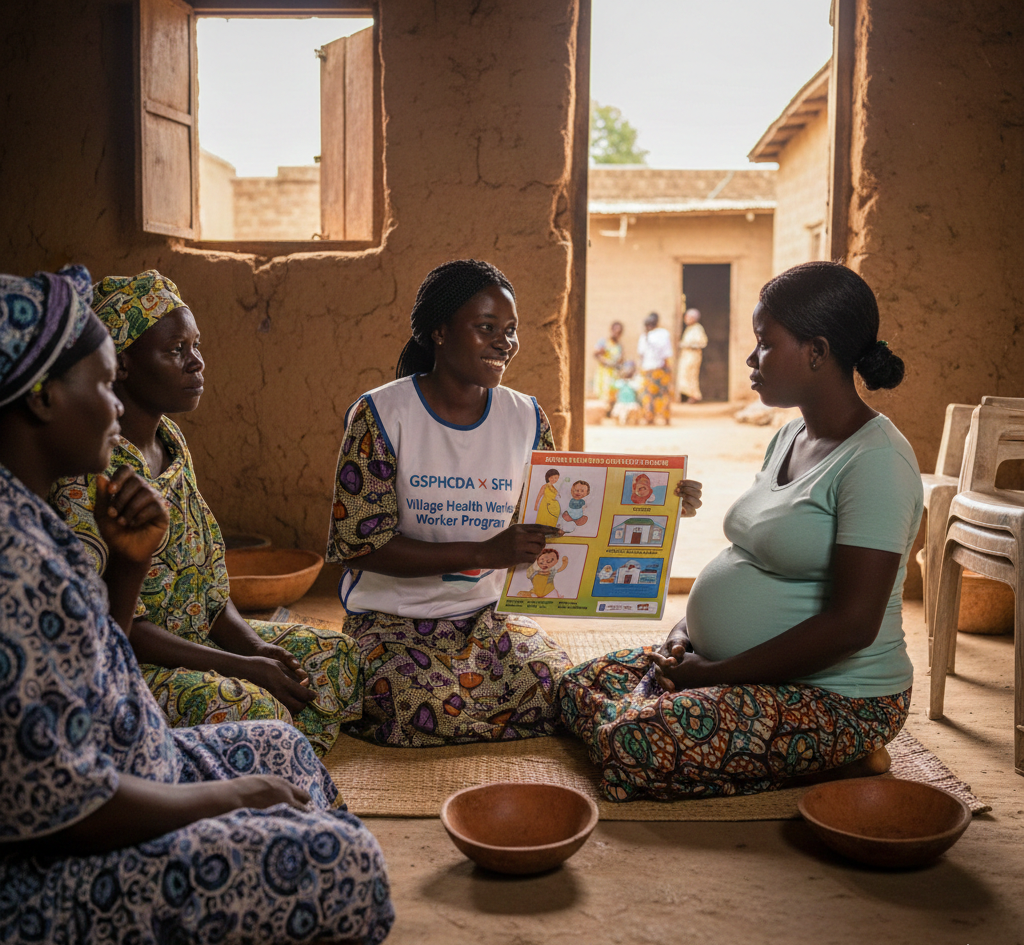
Project Overview Gombe State faces persistently low maternal health service utilization, with antenatal care (ANC) and facility delivery uptake at 58.2% and 27.6% respectively, alongside high maternal (1,002 per 100,000 live births) and infant mortality rates (20.7 per 1,000 live births). To address these challenges, the Gombe State Primary Healthcare Development Agency (GSPHCDA), in collaboration with Society for Family Health (SFH), implemented the Village Health Worker (VHW) Program across 57 of the state’s 114 wards (50% geographic coverage). The program recruited and trained approximately 1,200 indigenous women through an intensive three-week training on basic maternal, neonatal, and child health (MNCH). Trained VHWs conducted home visits to educate and encourage pregnant women to utilize MNCH services, particularly facility-based delivery care. Following nearly two years of implementation (October 2016–September 2018), facility delivery uptake in intervention wards increased substantially, with a mean uptake of 65%. To understand variations in outcomes across wards, this study assessed the acceptability of the VHW program and explored facilitators and barriers influencing women’s use of facility delivery services. A mixed-methods approach was employed, combining socio-demographic surveys with qualitative focus group discussions (FGDs). Study participants included 58 women from three wards representing maximum (Banganje North – 96%), average (Akko – 65%), and minimum (Zange – 23%) facility delivery uptake. Qualitative data were analyzed using deductive thematic analysis.
The study found that the VHW program was widely accepted and appreciated by beneficiary women. Satisfaction with the program was strongly linked to regular home visits, culturally appropriate health education, and the interpersonal trust established by VHWs as respected community members. Women reported improved awareness and utilization of MNCH services as a result of VHW engagement, with 64% of respondents delivering in health facilities within the 12 months preceding the study. Facilitators of facility delivery included geographic and financial accessibility, supportive family members (notably husbands and mothers-in-law), and perceptions of higher-quality and immediate care at health facilities. Barriers varied by ward and included transportation costs, out-of-pocket payments, availability of traditional birth attendants, limited 24-hour staffing at facilities, imminent labor, and socio-cultural constraints such as the absence of male accompaniment. The findings underscore that while the VHW model is effective and scalable, optimizing its impact requires a multi-pronged approach that addresses facility-level gaps, household decision-making dynamics, and community-specific socio-cultural barriers. The final outputs provide clear evidence to support program scale-up, integration of additional obstetric training for VHWs, and policy actions toward sustainable employment models. Collectively, the work positions the VHW program as a viable strategy for strengthening MNCH service uptake and reducing maternal and infant mortality in underserved settings.