

Project Details Duration : 03 months Client Website : https://avarynthgroup.com/ Need any service Business Consulting? Feel free
- Duration : 03 months
- Client Website : https://avarynthgroup.com/
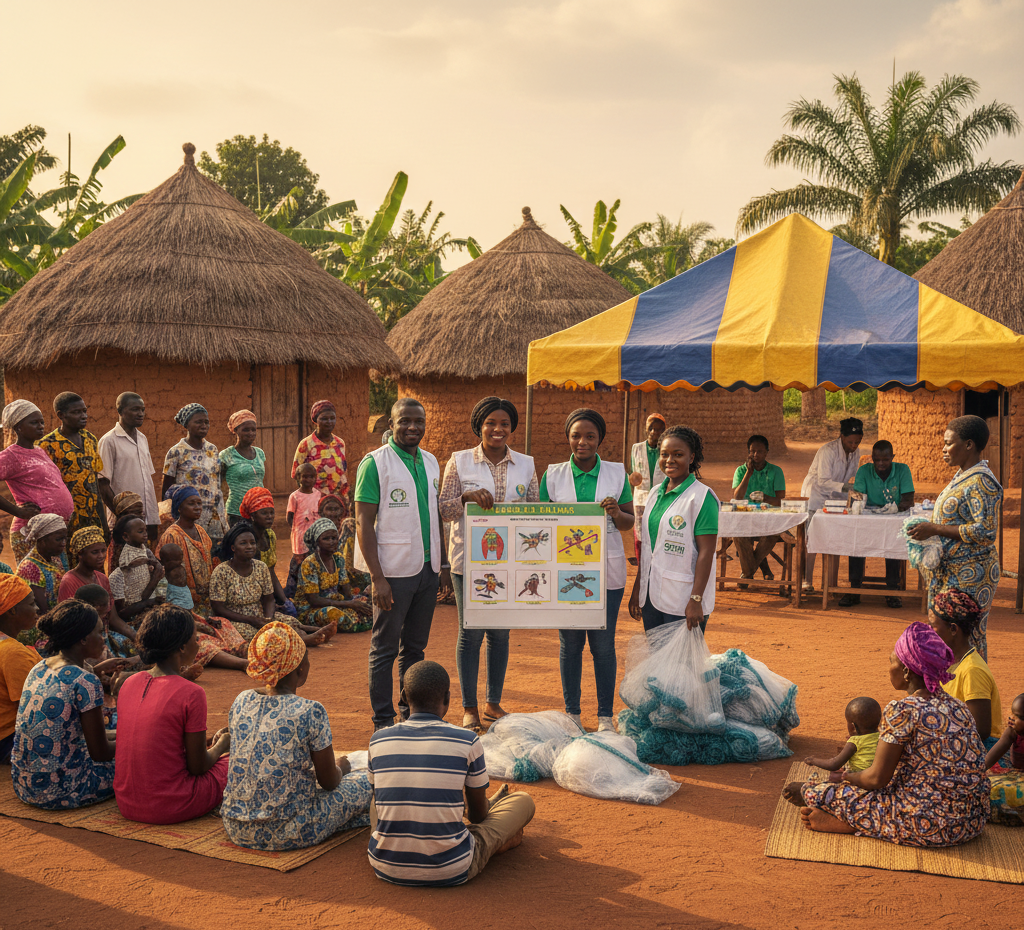
Project Overview Malaria remains a leading cause of morbidity and mortality in Nigeria, with an estimated 70–110 million clinical cases annually. The disease accounts for approximately 60% of outpatient visits and 30% of hospital admissions nationwide, contributing to an estimated 300,000 deaths annually among children under five years of age. Malaria is also responsible for about 30% of childhood deaths and 11% of maternal deaths, with Plasmodium falciparum being the predominant and most severe causative species in Nigeria. Transmission is driven by the bite of infected female Anopheles mosquitoes and peaks during the rainy season, when environmental conditions favor increased vector density. Beyond its health burden, malaria exerts significant socio-economic impacts, including reduced productivity, school absenteeism, and constrained economic development, particularly in rural and underserved communities. This project provided a comprehensive situational analysis of malaria epidemiology, health system capacity, and contextual drivers in Benue State. Benue State, located in Nigeria’s North-Central geopolitical zone, has a projected population of over 5.6 million and a predominantly agrarian economy. Its climatic conditions—characterized by prolonged rainy seasons, high temperatures, and extensive river systems—create a favorable environment for malaria transmission.
The assessment examined the state’s health system architecture, service delivery capacity, and malaria control structures, including the State Malaria Elimination Programme (SMEP), health facility distribution, and supervisory systems. Particular attention was given to disparities between rural and urban health services, health-seeking behaviors, and human resource constraints affecting malaria prevention and case management.
The assessment revealed that Benue State’s malaria burden is amplified by favorable climatic conditions, extensive river networks, and socio-economic vulnerabilities. While the state operates a three-tier health system—primary, secondary, and tertiary—service delivery is constrained by uneven facility distribution, inadequate human resources, and poor health-seeking behaviors, especially in rural areas. The state has 1,408 health facilities, comprising public and private providers across all tiers of care. However, health infrastructure and personnel are disproportionately concentrated in urban areas, limiting access for rural populations. Although key malaria coordination mechanisms such as the State Malaria Elimination Programme (SMEP) and the Malaria Integrated Supportive Supervision (MISS) system are functional, systemic challenges persist, including staffing shortages driven by prolonged employment embargoes and workforce attrition. Low antenatal care attendance and a preference for home delivery further undermine malaria prevention efforts among pregnant women, despite the establishment of platforms such as the Malaria in Pregnancy Technical Working Group (MIPTWG), MNCH weeks, and immunization campaigns. The findings underscore the need for integrated, context-responsive malaria interventions that address environmental risks, strengthen primary healthcare capacity, improve community health-seeking behavior, and expand the availability of skilled health workers. Overall, the work provides a strong analytical foundation for designing targeted malaria control and elimination interventions in Benue State. It positions policymakers and implementing partners to adopt evidence-based, multi-sectoral strategies that align malaria programming with broader primary healthcare strengthening and human development goals.